





Experience
Seasoned asset managers with a passion for uplifting others through real estate investing opportunities.

Education
Build confidence in your ability to invest wisely with the free educational resources

Connection
Stay informed and up to date with the latest investment opportunities and company developments
About us
Christopher Linger and Maricela Soberanes are principals at Up Plex Capital LLC. Accredited Real estate investors. Having built a personal portfolio valued at over $100M, they’ve created significant passive income for themselves and their investors by finding the best properties today’s market can offer. Maricela has a business degree and a successful medical service business since 2015. Chris has an MBA, twenty-seven years of active duty Navy services (ret), now full-time apartment syndicator.
Experience
Seasoned asset managers with a passion for uplifting others through real estate investing opportunities.
Education
Build confidence in your ability to invest wisely with the free educational resources
Connection
Stay informed and up to date with the latest investment opportunities and company developments
Be the First to Know
Receive exclusive investment opportunities, and the latest investing strategies ...right to your inbox.
About Chris and Maricela
Christopher Linger and Maricela Soberanes are principals at Up Plex Capital LLC. Accredited Real estate investors. Having built a personal portfolio valued at over $100M, they’ve created significant passive income for themselves and their investors by finding the best properties today’s market can offer. Maricela has a business degree and a successful medical service business since 2015. Chris has an MBA, twenty-seven years of active-duty Navy services (ret), now full-time apartment syndicator.
Be the First to Know
Receive exclusive investment opportunities, and the latest investing strategies ...right to your inbox.
Hear From Our Investors
My wife and I thank our lucky stars that we worked with Chris and Maricela, they are so organized and always willing to make a win-win situation.
- S. McDonald -
McDonald Homes
I’ve said it before, I’ll say it 100 times. We
owe our success to you both. Great mentors like you [Chris & Maricela] have
helped tremendously!
- S. Enyard -
Anchor Atlas Properties Founder
After seeing and relating to some of my frustrations, they drove two hours to help
with our four-plex renovation. Chris & Maricela are always a wealth of knowledge.
- C. Byler -
Passive Patriots Founder
Low Operational Costs
Facilities require minimal maintenance and management compared to other real estate.
High Profit Margins
Steady cash flow with low overhead leads to strong returns.


Value-Add Opportunities
Simple upgrades like security or climate control can boost income and property value.
Scalability
Easily expand by adding units or acquiring new facilities.



3 Investing Tips

Start Now
The best time to invest in real estate is now and with the right investment, you can see amazing growth in just 18 months.

Trust in Proven Returns
The best time to invest in real estate is now and with the right investment, you can see amazing growth in just 18 months.

Start Just With $50K
It takes less than you think to get started and with the right team you'll shorten your learning curve and increase your returns.
3 Investing Tips
Start Now
The best time to invest in real estate is now and with the right investment, you can see amazing growth in just 18 months.
Trust in Proven Returns
The best time to invest in real estate is now and with the right investment, you can see amazing growth in just 18 months.
Start Just With $50K
It takes less than you think to get started and with the right team you'll shorten your learning curve and increase your returns.
Schedule A Free Consultation
Invest with confidence. We’ll help you understand how to evaluate if a certain asset is right for you.
Schedule A Free Consultation
Invest with confidence. We’ll help you understand how to evaluate if a certain asset is right for you.
Our Assets
We strategically focus on a variety of asset types in order to create a strong and diverse portfolio of assets that can hedge against economic uncertainties. Creating safer investment opportunities for our investors.
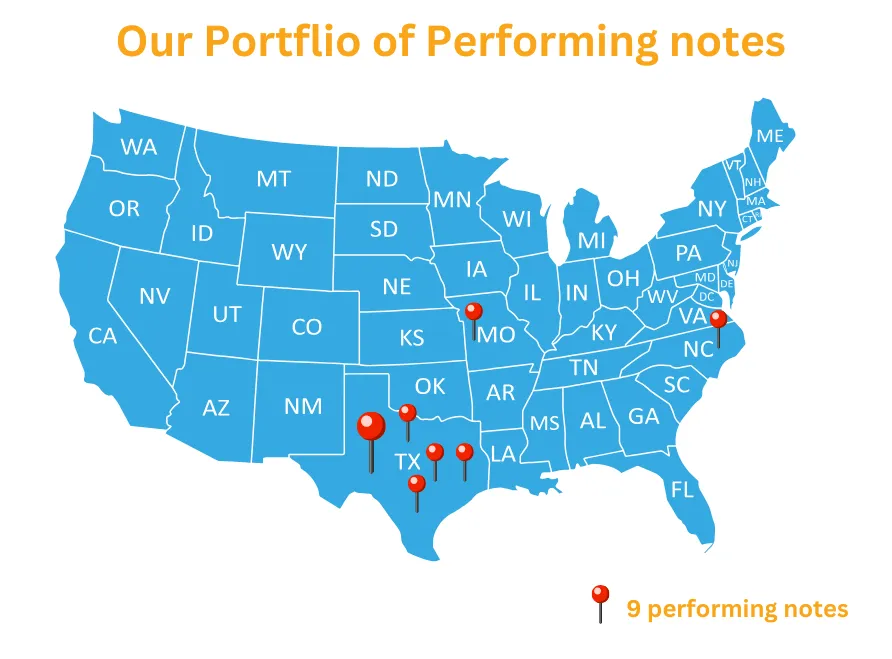
Our Assets
We strategically focus on a variety of asset types in order to create a strong and diverse portfolio of assets that can hedge against economic uncertainties. Creating safer investment opportunities for our investors.
FREE Educational
Materials
Learn important investing concepts and strategies at your own pace with our "Savvy Passive Investor" series on YouTube
FREE Educational Materials
Learn important investing concepts and strategies at your own pace with our "Savvy Passive Investor" series on YouTube
Latest News
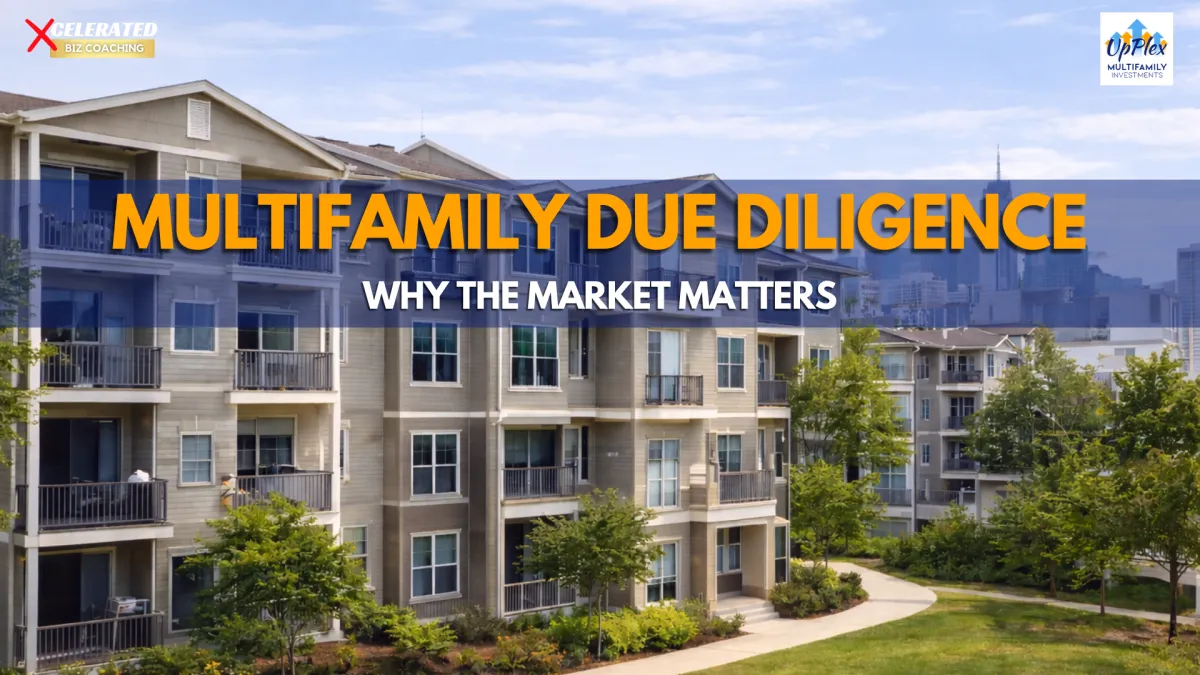
Multifamily Due Diligence: Why the Market Matters
When investors evaluate a multifamily property, there are several layers of due diligence that happen before anyone decides to move forward with a deal. One of the most important — and often overlooked by beginners — is the market itself.
It’s easy to get excited about a property. Maybe the numbers look good. Maybe the building is attractive or recently renovated. But experienced investors know something important:
A great property in the wrong market can still struggle to perform.
On the other hand, a solid property in the right market can benefit from powerful economic tailwinds. That’s why many investors focus heavily on identifying the right cities and regions first, and only then start evaluating individual deals.
The more you focus on a specific market — or a handful of markets — the easier it becomes to spot strong opportunities and avoid risky ones.
So what exactly do investors look for when evaluating a market for multifamily investments?
Let’s walk through the fundamentals.
A Landlord-Friendly Legal Environment
The legal structure of a market can have a major impact on how easily a property can be operated.
In some cities, strict rent control laws and complicated eviction processes can make it difficult for owners to execute their business plans. These environments can create friction when trying to improve operations, make renovations, or adjust rents to market levels.
Because of this, many multifamily investors prefer markets with more balanced landlord-tenant laws that allow properties to be managed efficiently.
A supportive legal framework doesn’t just make operations smoother — it also reduces risk for investors.
Population Growth Drives Demand
One of the simplest indicators of a strong multifamily market is population growth.
When people move into a city, they need housing. And for many of those new residents, renting is the most practical option.
Cities experiencing steady population growth tend to see stronger rental demand, healthier occupancy rates, and more stable rent growth over time.
In other words, investing in markets where people are moving can significantly improve the long-term outlook for an apartment investment.
Consistent Rent Growth
Another factor investors study is historical rent growth.
Markets that show steady rent growth over time tend to be easier to analyze and forecast. That consistency helps investors make more reliable projections when underwriting a deal.
Rent growth also has a direct impact on property values.
In multifamily real estate, property value is largely driven by Net Operating Income (NOI). Even small increases in NOI can create significant value. For example, at a 5% cap rate, every $1 increase in NOI increases property value by about $20.
That’s why markets with strong rent growth trends are so attractive to multifamily investors.
Income Levels and Job Strength
Healthy local economies typically include strong median incomes and low unemployment rates.
Where there are jobs, people tend to move. And when people have stable income, they’re more capable of paying rent consistently.
When evaluating a potential investment, investors often study the income demographics within a one-mile and three-mile radius around the property.
Of course, income levels need context. A $40,000 median income might be solid in one city but very low in another. It’s just one piece of the overall picture.
Economic Diversity Adds Stability
Markets with diverse industries tend to be more resilient during economic downturns.
If a local economy relies heavily on a single industry or employer, the entire housing market can feel the impact if that industry slows down.
For example, cities heavily tied to oil and gas often experience fluctuations in housing demand when energy markets change.
A diversified economy — with multiple major employers and industries — helps create more stable demand for housing over time.
The Cost of Owning vs Renting
Another dynamic investors pay attention to is the relationship between homeownership costs and rental prices.
If buying a home is significantly cheaper than renting, many renters may eventually choose to purchase instead. That can reduce demand for rental housing.
But in markets where homeownership is expensive — due to high home prices, interest rates, taxes, and insurance — renting often remains the more practical option.
When the cost of buying is much higher than renting, demand for apartments tends to stay strong.
Why Market Selection Matters So Much
At the end of the day, market selection plays a huge role in the success of a multifamily investment.
You can execute a strong business plan, improve operations, and manage a property well — but if the market itself is struggling, those efforts may face an uphill battle.
That’s why experienced investors prefer to invest where the fundamentals are already working in their favor.
Think of it this way: it’s much easier to sail with the wind at your back than against it.
Next: Evaluating the Property Itself
Market analysis is just the first step in multifamily due diligence.
Once investors identify a strong market, the next step is evaluating the specific property — including its financials, operations, condition, and potential for improvement.
In the next article, we’ll walk through the key factors investors analyze before deciding whether to submit an offer on a multifamily property.
Ready to Learn More About Multifamily Investing?
If you're interested in learning more about multifamily real estate investing through strategic partnerships or professionally managed opportunities, Up-Plex is here to help. Let’s start the conversation—contact us today to learn more.

LEAVE A REPLY

Check Out Our Latest BLOG Post
Multifamily Due Diligence: Why the Market Matters
When investors evaluate a multifamily property, there are several layers of due diligence that happen before anyone decides to move forward with a deal. One of the most important — and often overlooked by beginners — is the market itself.
It’s easy to get excited about a property. Maybe the numbers look good. Maybe the building is attractive or recently renovated. But experienced investors know something important:
A great property in the wrong market can still struggle to perform.
On the other hand, a solid property in the right market can benefit from powerful economic tailwinds. That’s why many investors focus heavily on identifying the right cities and regions first, and only then start evaluating individual deals.
The more you focus on a specific market — or a handful of markets — the easier it becomes to spot strong opportunities and avoid risky ones.
So what exactly do investors look for when evaluating a market for multifamily investments?
Let’s walk through the fundamentals.
A Landlord-Friendly Legal Environment
The legal structure of a market can have a major impact on how easily a property can be operated.
In some cities, strict rent control laws and complicated eviction processes can make it difficult for owners to execute their business plans. These environments can create friction when trying to improve operations, make renovations, or adjust rents to market levels.
Because of this, many multifamily investors prefer markets with more balanced landlord-tenant laws that allow properties to be managed efficiently.
A supportive legal framework doesn’t just make operations smoother — it also reduces risk for investors.
Population Growth Drives Demand
One of the simplest indicators of a strong multifamily market is population growth.
When people move into a city, they need housing. And for many of those new residents, renting is the most practical option.
Cities experiencing steady population growth tend to see stronger rental demand, healthier occupancy rates, and more stable rent growth over time.
In other words, investing in markets where people are moving can significantly improve the long-term outlook for an apartment investment.
Consistent Rent Growth
Another factor investors study is historical rent growth.
Markets that show steady rent growth over time tend to be easier to analyze and forecast. That consistency helps investors make more reliable projections when underwriting a deal.
Rent growth also has a direct impact on property values.
In multifamily real estate, property value is largely driven by Net Operating Income (NOI). Even small increases in NOI can create significant value. For example, at a 5% cap rate, every $1 increase in NOI increases property value by about $20.
That’s why markets with strong rent growth trends are so attractive to multifamily investors.
Income Levels and Job Strength
Healthy local economies typically include strong median incomes and low unemployment rates.
Where there are jobs, people tend to move. And when people have stable income, they’re more capable of paying rent consistently.
When evaluating a potential investment, investors often study the income demographics within a one-mile and three-mile radius around the property.
Of course, income levels need context. A $40,000 median income might be solid in one city but very low in another. It’s just one piece of the overall picture.
Economic Diversity Adds Stability
Markets with diverse industries tend to be more resilient during economic downturns.
If a local economy relies heavily on a single industry or employer, the entire housing market can feel the impact if that industry slows down.
For example, cities heavily tied to oil and gas often experience fluctuations in housing demand when energy markets change.
A diversified economy — with multiple major employers and industries — helps create more stable demand for housing over time.
The Cost of Owning vs Renting
Another dynamic investors pay attention to is the relationship between homeownership costs and rental prices.
If buying a home is significantly cheaper than renting, many renters may eventually choose to purchase instead. That can reduce demand for rental housing.
But in markets where homeownership is expensive — due to high home prices, interest rates, taxes, and insurance — renting often remains the more practical option.
When the cost of buying is much higher than renting, demand for apartments tends to stay strong.
Why Market Selection Matters So Much
At the end of the day, market selection plays a huge role in the success of a multifamily investment.
You can execute a strong business plan, improve operations, and manage a property well — but if the market itself is struggling, those efforts may face an uphill battle.
That’s why experienced investors prefer to invest where the fundamentals are already working in their favor.
Think of it this way: it’s much easier to sail with the wind at your back than against it.
Next: Evaluating the Property Itself
Market analysis is just the first step in multifamily due diligence.
Once investors identify a strong market, the next step is evaluating the specific property — including its financials, operations, condition, and potential for improvement.
In the next article, we’ll walk through the key factors investors analyze before deciding whether to submit an offer on a multifamily property.
Ready to Learn More About Multifamily Investing?
If you're interested in learning more about multifamily real estate investing through strategic partnerships or professionally managed opportunities, Up-Plex is here to help. Let’s start the conversation—contact us today to learn more.
LEAVE A REPLY